Shrimp Pad Thai

Shrimp Pad Thai is one of those dishes that feels just right no matter the occasion. It’s a delightful mix of textures and flavors: the crunch of peanuts, the tenderness of shrimp, and the satisfying chew of rice noodles all come together in a beautiful symphony that dances on your palate. Imagine slurping up that luscious sauce, perfectly tangy and sweet, as it envelops each strand of noodle. This dish, traditionally from Thailand, brightens up any dinner table and has a way of transporting you to bustling Bangkok streets filled with street vendors and the enticing aroma of sizzling woks.
Table of Contents
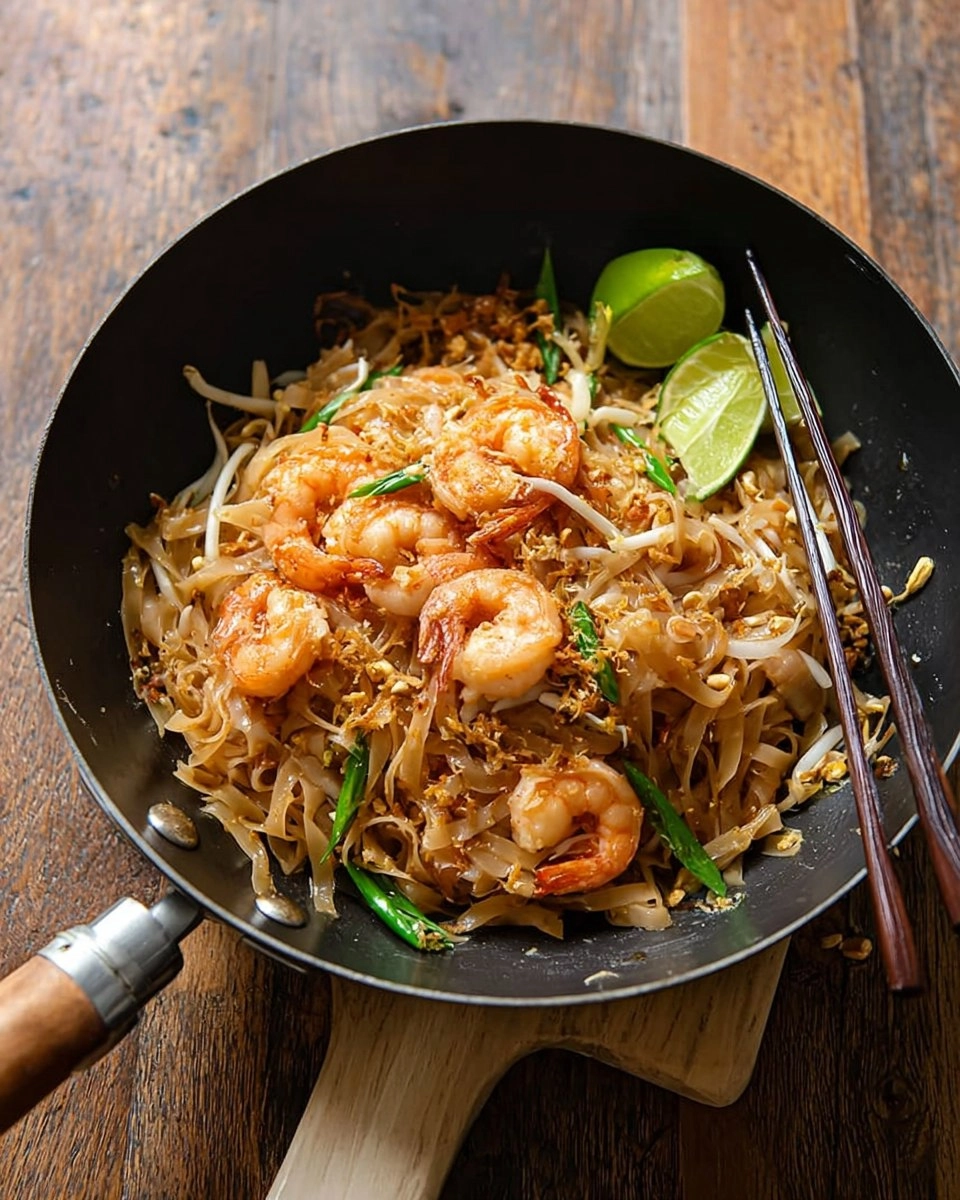
I first fell in love with Shrimp Pad Thai during a trip to a small Thai restaurant tucked away in my neighborhood. Each bite was an explosion of flavor, and I found myself craving it often. After some experimentation in my own kitchen, I discovered a version that’s not only simple to whip up but also delivers on taste without requiring a culinary degree. Packed with vitamins and protein, it quickly became a weeknight staple in my home. It’s time to bring that same magic to your kitchen!
Why You’ll Love This Recipe
- Simple & Quick: Whip up this dish in about 30 minutes, making it perfect for busy weeknights.
- Irresistible Flavor: A perfect balance of sweet, sour, and umami makes your taste buds rejoice.
- Eye-Catching Appeal: The vibrant colors from fresh vegetables and shrimp make this dish a showstopper.
- Flexible Serving: Serve it as a casual weeknight dinner or dress it up for special occasions.
- Diet-Friendly Options: Easily adaptable for gluten-free (using rice noodles) or vegetarian diets.
Ingredients You’ll Need
- 8 ounces rice noodles: This is the foundation of your Pad Thai. Use flat rice noodles for the best texture.
- 1 pound shrimp, peeled and deveined: Fresh shrimp gives the best flavor and texture, but frozen works too—simply thaw before using.
- 2 tablespoons vegetable oil: This helps prevent the noodles from sticking and adds a lovely richness.
- 2 eggs: They’ll provide a nice protein boost and create that beautiful, creamy texture when scrambled.
- 2 cups bean sprouts: These add that satisfying crunch and fresh taste typical of Pad Thai.
- 3 green onions, chopped: They lend a mild onion flavor and bright green color.
- 1/4 cup roasted peanuts, chopped: A must for that classic crunch—use unsalted for better control of seasoning.
- 1/4 cup fish sauce: This adds the essential umami depth. For a vegetarian version, try soy sauce or tamari.
- 2 tablespoons tamarind paste: This is key to that classic Pad Thai flavor, balancing sweetness and tang. If unavailable, a mix of lime juice and brown sugar can work in a pinch.
- 1 tablespoon sugar: Enhances the sweetness of the sauce.
- 1 lime, cut into wedges: For serving, it brings a bright freshness that ties everything together.
How to Make Shrimp Pad Thai
- Soak the Rice Noodles: Place the rice noodles in a bowl of hot water and let them soak for about 15-20 minutes until soft but still firm, then drain.
- Prepare Sauce: In a small bowl, mix the fish sauce, tamarind paste, and sugar, stirring until sugar is dissolved. This is your flavor powerhouse.
- Cook the Shrimp: In a large skillet or wok, heat the vegetable oil over medium-high heat. Add the shrimp and cook for about 2-3 minutes, until they turn pink and opaque. Remove them from the skillet and set them aside.
- Scramble the Eggs: In the same skillet, crack in the eggs, stirring constantly to scramble until just set, about 1-2 minutes. Then, push them to one side of the skillet.
- Add Noodles and Sauce: Add the soaked noodles into the skillet with the eggs. Pour the sauce over the noodles, tossing everything to combine and cooking for an additional 2-3 minutes, allowing the noodles to absorb the sauce.
- Combine Ingredients: Return the cooked shrimp to the skillet, along with bean sprouts and green onions. Toss well for another minute to heat everything through.
- Serve with Peanuts and Lime: Plate the Pad Thai and sprinkle with the chopped peanuts. Serve with lime wedges for drizzling over, creating that extra zing.
Storing & Reheating
To store your Shrimp Pad Thai, let it cool completely and transfer it to an airtight container. You can keep it in the refrigerator for up to 3 days. For longer storage, consider freezing the dish in a freezer-safe container for up to 3 months. When you’re ready to enjoy it again, simply thaw it in the fridge overnight, then reheat in a skillet over medium heat until warmed through, adding a splash of water or broth to refresh the noodles’ texture.
Chef’s Helpful Tips
- Ensure your shrimp are not overcooked; they should turn pink and curl slightly to retain their juiciness.
- Don’t skip soaking the noodles; this step is crucial for achieving the perfect texture.
- If you’d like some extra heat, add a pinch of red pepper flakes with the sauce.
- Be mindful of the sauce: taste it before serving to adjust the balance of sweet, salty, and tart according to your preference.
- If you’re cooking for a crowd, feel free to double the recipe—just adjust your cooking pan accordingly.
Shrimp Pad Thai is such a delightful dish that offers a burst of flavor while being incredibly versatile. Whether you’re making it for yourself on a busy weeknight or for friends at a gathering, it’s sure to impress. Don’t hesitate to tweak it to your liking—maybe add extra veggies or switch up the proteins. It’s a dish that’s meant to be enjoyed, so savor every bite!
Recipe FAQs
Can I make Shrimp Pad Thai in advance?
Absolutely! You can prepare many components in advance. Soak the noodles and make the sauce ahead of time. Just store everything separately and toss it together when you’re ready to serve.
What can I substitute for tamarind paste?
If you don’t have tamarind paste, a mix of lime juice and brown sugar can mimic the sweet and tangy flavor. You might also try a splash of apple cider vinegar mixed with sugar for a similar effect.
Is Pad Thai gluten-free?
Yes! To make your Shrimp Pad Thai gluten-free, simply select rice noodles and ensure your fish sauce or soy sauce is labeled gluten-free.
How can I adjust the spice level?
You can add sriracha or chili flakes to the sauce for extra heat. Alternatively, serve the dish with sliced fresh chilies on the side so everyone can customize their spice level.
PrintMore Main Dishes Recipes
Did You Enjoy Making This Recipe? Please rate this recipe with ⭐⭐⭐⭐⭐ or leave a comment.
📖 Recipe Card
Shrimp Pad Thai
- Prep Time: NaN minutes
- Cook Time: No data
- Total Time: 0 hours
- Yield: 4 servings 1x
- Category: Main Dishes
- Method: Stir Fry
- Cuisine: Thai
Description
This Shrimp Pad Thai features irresistible flavors from shrimp, rice noodles, and a delightful sauce. It’s a quick and easy meal, perfect for busy evenings or a delicious treat at home.
Ingredients
- 8 ounces rice noodles
- 1 pound shrimp, peeled and deveined
- 2 tablespoons vegetable oil
- 2 eggs
- 2 cups bean sprouts
- 3 green onions, chopped
- 1/4 cup roasted peanuts, chopped
- 1/4 cup fish sauce
- 2 tablespoons tamarind paste
- 1 tablespoon sugar
- 1 lime, cut into wedges
Instructions
- Soak the rice noodles in hot water for 30-40 minutes until mostly softened. Combine the tamarind purée, fish sauce, and light brown sugar, then set it aside to dissolve.
- In a large wok, heat 1 tablespoon of vegetable oil and add the shrimp. Cook until pink on each side, then remove from the pan and set aside.
- Add another tablespoon of oil to the wok, then stir fry the chopped shallot, minced garlic, and chilli flakes for a minute. Add the drained noodles with some clinging water, pour in the mixed sauce, and cook for 1-2 minutes until the noodles are soft yet chewy.
- Push the noodles to the side and crack 2 eggs into the empty space. Cook for 30 seconds, then pile the noodles over them and cook until the eggs set. Toss lightly to combine.
- Add the bean sprouts, green onions, cooked shrimp, and half of the peanuts to the wok. Toss until the onions are slightly wilted and the beansprouts remain crunchy, then remove from heat. Serve with lime wedges and the remaining peanuts.
Notes
Ensure the rice noodles are well-soaked for the best texture.
Adjust the chilli flakes according to your heat preference.
Garnish with extra peanuts and lime for added flavor.
Nutrition
- Serving Size: 1 serving
- Calories: 380
- Sugar: 6g
- Sodium: 900mg
- Fat: 16g
- Saturated Fat: 2g
- Unsaturated Fat: <1g
- Trans Fat: 0g
- Carbohydrates: 44g
- Fiber: 3g
- Protein: 20g
- Cholesterol: 150mg